


If you’ve been injured because of someone else’s negligence, it’s natural to focus first on your health, medical treatment, and getting your life back on track. Filing a legal claim may be the last thing on your mind.
Unfortunately, waiting too long can have serious consequences.
Florida law places strict deadlines on when injured individuals can file a lawsuit. Missing that deadline may prevent you from pursuing compensation, regardless of how strong your case might otherwise be.
If you’ve searched for the Florida personal injury statute of limitations, you’ve probably seen the simple answer: “You have two years.”
While that’s generally true for many negligence claims filed today, the law is more nuanced than that. The deadline depends on when your claim accrued, the type of case involved, and whether any legal exceptions apply. Even if you technically have time remaining, waiting can make proving your case much more difficult as evidence disappears and memories fade.
This guide explains Florida’s current filing deadline, the significant law change that took effect in 2023, common exceptions that may affect the timeline, and why acting promptly can strengthen your position.
Florida’s Personal Injury Filing Deadline
A statute of limitations is the legal deadline for filing a lawsuit.
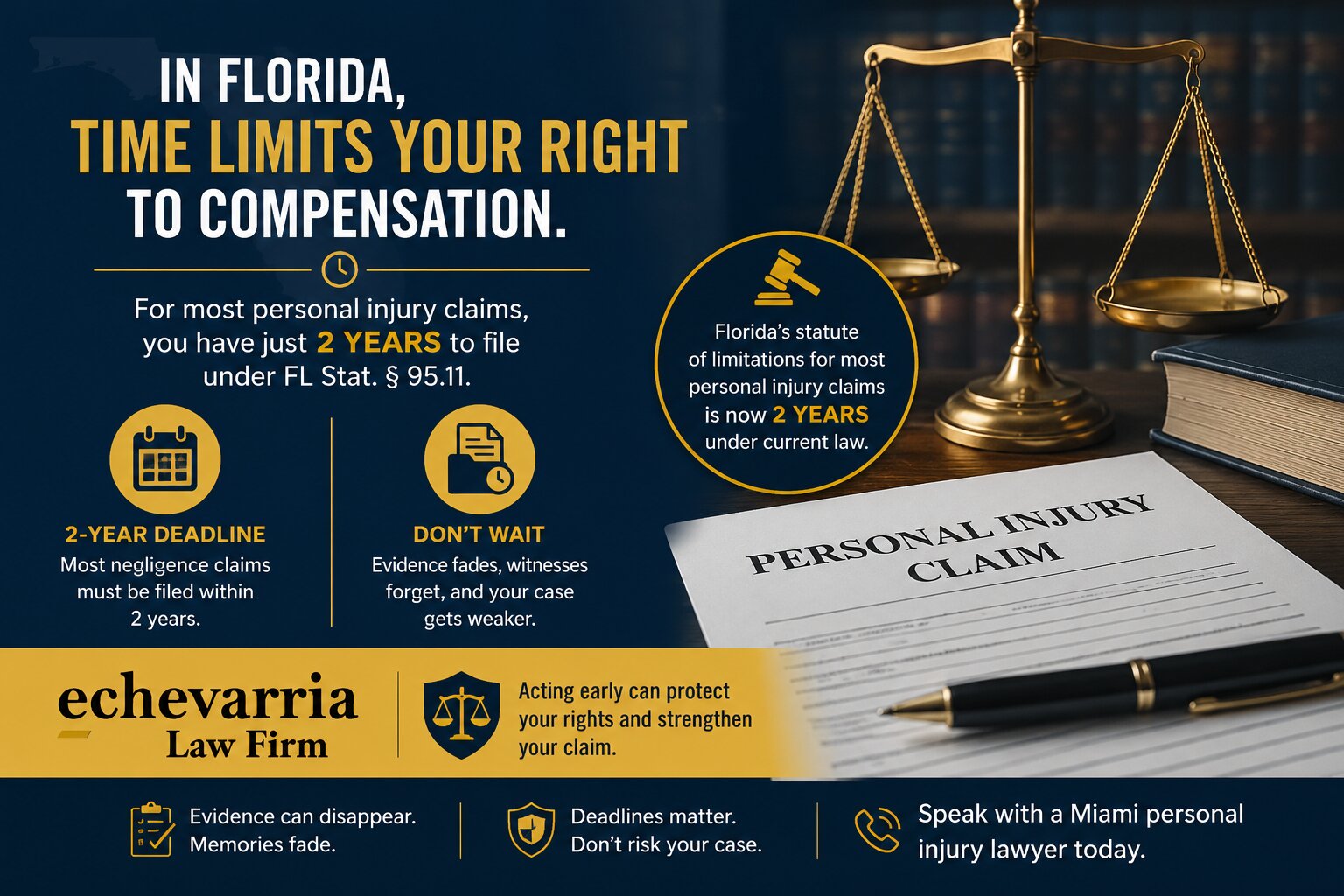
For most negligence-based personal injury claims in Florida, the filing deadline is now two years under Florida Statutes § 95.11, subject to certain exceptions and depending on when the cause of action accrued.
Personal injury claims commonly include accidents involving:
- Motor vehicle collisions
- Truck accidents
- Motorcycle accidents
- Bicycle accidents
- Pedestrian accidents
- Slip and fall incidents
- Premises liability
- Dog bites
- Other negligence-related injuries
If a lawsuit is filed after the applicable statute of limitations expires, the court may dismiss the claim, even if the injured person suffered significant losses.
Because different rules can apply depending on the facts of the case, determining the correct deadline is an important first step.
When Does the Clock Start Running?
Many people assume the deadline begins when they finish medical treatment.
That is usually not how the statute of limitations works.
In many negligence cases, the clock begins running on the date the injury occurred or when the legal cause of action accrued under Florida law.
However, some claims involve circumstances where the injury is not immediately apparent or where different legal rules determine when the filing period begins.
Understanding when the statute starts running is just as important as knowing how long the filing period lasts.
Florida’s 2023 Change: From 4 Years to 2 Years
One of the most significant recent developments in Florida personal injury law occurred in 2023.
For many years, most negligence claims could generally be filed within four years.
In 2023, Florida lawmakers enacted legislation that reduced the statute of limitations for many negligence actions from four years to two years.
This change means injured individuals generally have less time to:
- Investigate the accident
- Gather evidence
- Obtain medical documentation
- Negotiate with insurance companies
- Decide whether litigation is necessary
Although older accidents may still be governed by prior law depending on when the claim accrued, newer negligence claims are generally subject to the shorter filing period.
Because determining which law applies can depend on the specific facts and dates involved, obtaining legal guidance early is often beneficial.
Exceptions That Shorten or Extend the Deadline
Although the two-year rule applies to many negligence claims, not every personal injury case follows the same timeline.
Certain claims may involve shorter deadlines, longer deadlines, or special legal rules.
The Discovery Rule
Some injuries are not immediately identifiable.
In limited situations, Florida law may recognize that the filing period begins when an injury is discovered—or reasonably should have been discovered—rather than on the date the underlying event occurred.
The availability of the discovery rule depends on the type of claim and the specific facts involved.
Claims Involving Minors
When an injured person is a minor, different legal rules may affect the filing deadline.
The applicable statute of limitations depends on factors such as:
- The child’s age
- The type of injury
- The legal claim involved
- Other statutory requirements
These cases can involve unique procedural issues that should be evaluated carefully.
Claims Against Government Entities
Suing a city, county, state agency, or other governmental entity often involves additional procedural requirements.
Government claims may require:
- Advance notice
- Compliance with statutory notice provisions
- Different filing deadlines
- Specific administrative procedures
Missing these requirements can affect the ability to pursue a claim.
Medical Malpractice Claims
Medical malpractice cases follow different rules than many ordinary negligence claims.
These cases may involve:
- Specific statutes of limitations
- Statutes of repose
- Pre-suit investigation requirements
- Expert review procedures
- Notice obligations
Because these claims involve unique legal requirements, early evaluation is especially important.
Wrongful Death Claims
When negligence results in a person’s death, different legal provisions generally govern the filing deadline.
Wrongful death actions are separate from ordinary personal injury claims and should be evaluated according to the specific statutes that apply.
Why Waiting Weakens Your Case
Even if you remain within the statute of limitations, delaying action can create practical challenges that make proving your claim more difficult.
Evidence Can Disappear
Physical evidence rarely lasts forever.
Accident scenes change.
Vehicles are repaired or sold.
Surveillance video may be deleted.
Hazardous conditions are corrected.
The sooner evidence is documented, the easier it is to preserve.
Witnesses Forget Important Details
Memories naturally fade over time.
A witness who clearly remembers an accident shortly after it occurred may struggle to recall important details months or years later.
Prompt investigation often produces more reliable witness statements.
Medical Records Become More Complicated
Delays in treatment sometimes create questions about whether injuries resulted from the accident.
Insurance companies may argue that later medical issues were caused by something unrelated.
Seeking timely medical care and maintaining consistent treatment can help establish the connection between the accident and your injuries.
Insurance Companies Gain Leverage
Insurance companies often investigate claims immediately after an accident.
If significant time passes before a claim is pursued, insurers may argue:
- Evidence is incomplete.
- Witnesses cannot be located.
- Medical treatment gaps weaken causation.
- Injuries resulted from later events.
Although every case is different, acting promptly generally provides more opportunities to gather supporting evidence.
Important Documents May Be Lost
Critical records may become more difficult to obtain over time.
Examples include:
- Surveillance footage
- Business records
- Cell phone records
- Employment records
- Vehicle maintenance logs
- Electronic crash data
Preserving documentation early often strengthens a claim.
What to Do Now if You Have a Personal Injury Claim
If you’ve been injured because of someone else’s negligence, taking prompt action can help protect your legal rights.
Consider the following steps:
Seek Appropriate Medical Care
Your health should always be the first priority.
Medical evaluation also creates documentation that may become important later.
Preserve Evidence
Keep copies of:
- Medical records
- Medical bills
- Photographs
- Police reports
- Insurance correspondence
- Witness information
- Repair estimates
Organizing documents early makes future review much easier.
Avoid Waiting to Learn Your Rights
Many people delay because they hope the insurance company will resolve everything quickly.
While some claims settle without litigation, waiting too long may reduce available options.
Understanding your rights early does not necessarily mean filing a lawsuit immediately—it simply allows you to make informed decisions before important deadlines pass.
Monitor Important Dates
Because different deadlines may apply depending on the circumstances, keeping track of accident dates, treatment dates, insurance communications, and other important events can help avoid unnecessary complications.
Don’t Assume You Have Plenty of Time
One of the most common misconceptions about Florida personal injury law is that two years is a long time.
In reality, investigations, medical treatment, negotiations, and evidence collection often consume months before litigation is even considered.
The earlier you understand your legal rights, the more opportunity you have to preserve evidence and evaluate your options before deadlines become an issue.
If you have questions about the statute of limitations or your potential claim, speaking with a Miami personal injury lawyer or call us at (305) 707-3991 through the firm’s Personal Injury page can help you better understand how Florida law may apply to your specific circumstances.
Frequently Asked Questions
How long do I have to file a personal injury claim in Florida?
For most negligence-based personal injury claims that accrued under current Florida law, the statute of limitations is generally two years. However, different deadlines may apply depending on the type of claim and the specific facts involved.
What if I missed the deadline?
If the applicable statute of limitations has expired, the court may dismiss your lawsuit. However, because some cases involve exceptions or unique legal issues affecting the filing deadline, it is important not to assume your claim is automatically barred without obtaining legal guidance.
Does the statute of limitations apply to my specific case?
Yes, but the applicable deadline depends on the nature of the claim. Cases involving medical malpractice, government entities, wrongful death, minors, or other special circumstances may follow different legal rules than standard negligence claims.
Does filing an insurance claim stop the statute of limitations?
Generally, no. Filing an insurance claim or negotiating with an insurance company does not automatically extend or pause the legal deadline for filing a lawsuit. It is important to remain aware of the applicable statute of limitations while discussions with an insurer are ongoing.
Why did Florida change the statute of limitations from four years to two years?
In 2023, Florida enacted legislation that shortened the filing deadline for many negligence claims from four years to two years. The change means injured individuals generally have less time to investigate their case, preserve evidence, negotiate with insurers, and file a lawsuit if necessary.
Should I wait until I finish medical treatment before speaking with an attorney?
Not necessarily. While understanding the full extent of your injuries is important, seeking legal guidance early may help preserve evidence, identify applicable deadlines, and ensure important procedural requirements are not overlooked.
Disclaimer
This article is for general informational purposes only and does not constitute legal advice. For advice specific to your situation, contact a licensed Florida personal injury attorney.